


PROJECT DETAILS


Clark Bridge
Alton, Illinois, USA
Installed Products
“Super Bridge” gets a second life with Hydrel SAF7 lighting makeover
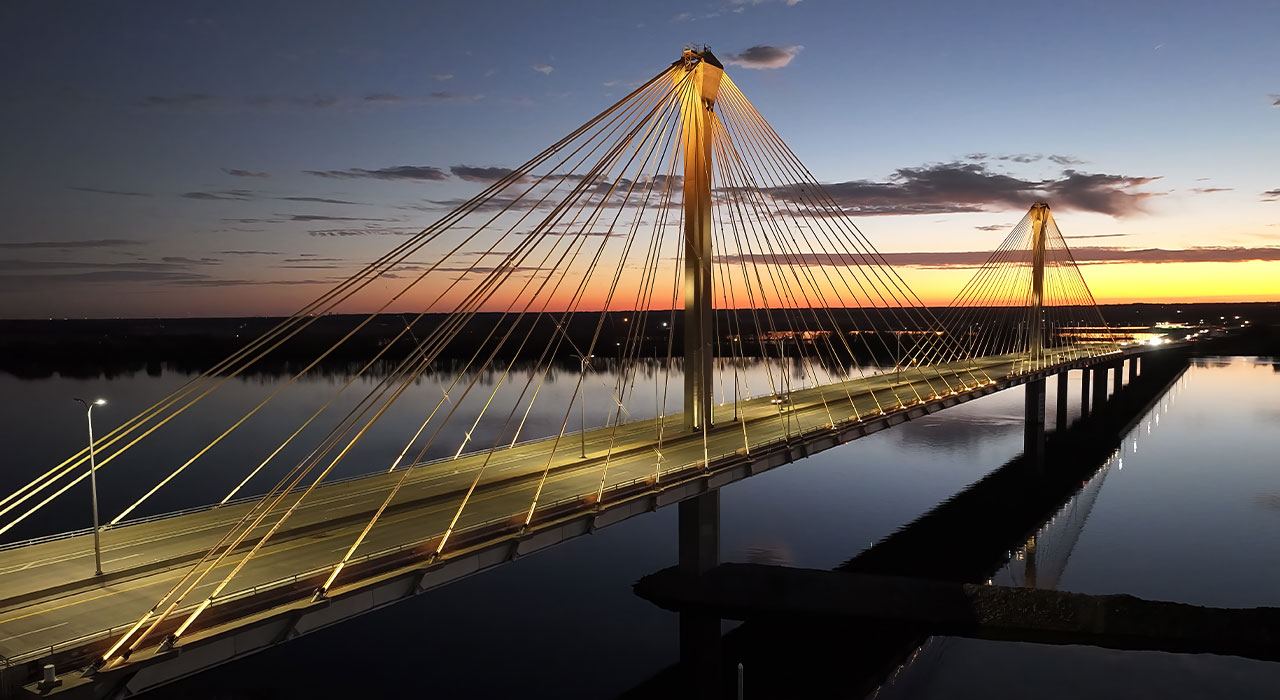
To restore the Clark Bridge’s nighttime presence, the City engaged St. Louis Lighting Group to lead a comprehensive lighting retrofit, partnering with local electrical contractor GRP|WEGMAN for installation. The team selected Hydrel’s SAF7 Specialty Architectural Flood (RGBW) as a one‑to‑one replacement, prioritizing longevity, precision, and controllability for a landmark that faces constant vibration and exposure.
Design Drivers: Vibration, Durability, Precision
Bridge environments impose unique mechanical stresses. The SAF7’s 3G vibration rating addressed the primary engineering requirement from the outset. To further strengthen the system for long‑term stability:
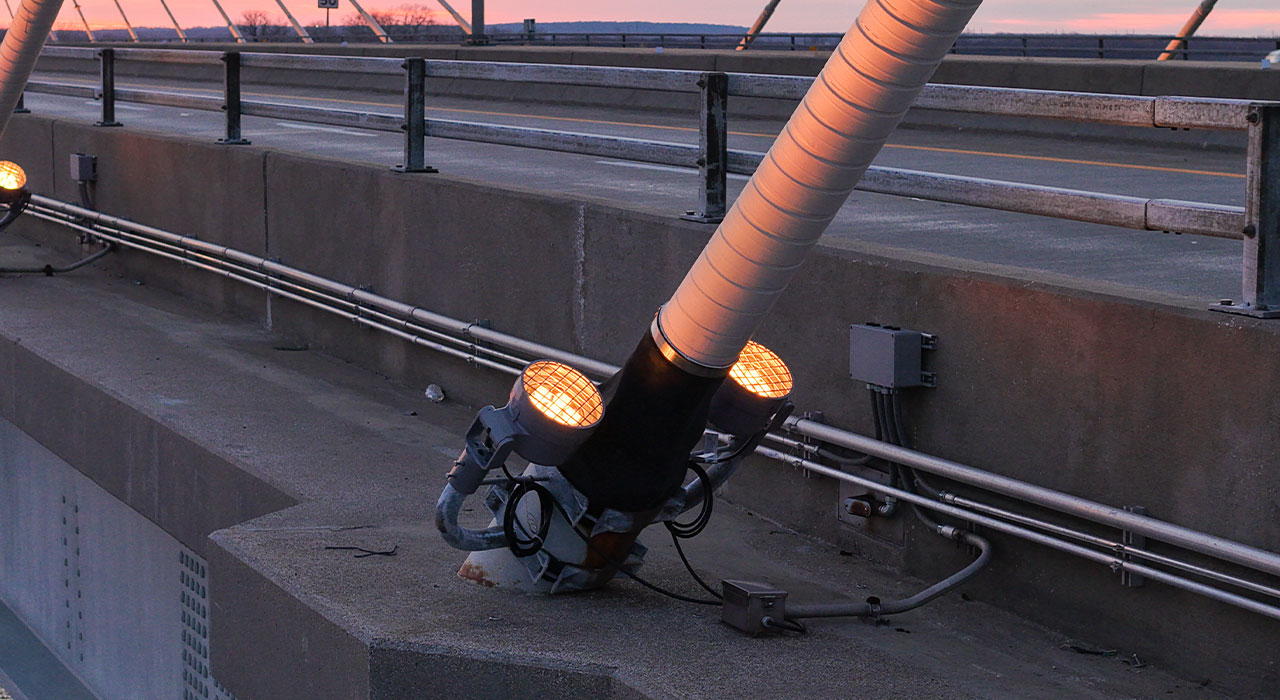
Mounting Strategy: Two SAF7 luminaires are installed at the base of each cable on a yoke mount, secured with a safety cable.
Tailored Slip‑Fitter Solution: A typical tenon slip‑fitter relies on set screws that can loosen under persistent vibration. In collaboration with Hydrel, the mount was factory‑welded directly to the yoke, eliminating a known failure point and reducing maintenance risk.
Tamper‑Resistant Hardware: Specified to keep assemblies secure despite vibration and public exposure.
Rock Guard Accessory: Added to shield lenses from rocks and debris thrown by passing vehicles—color‑matched to blend with the luminaire’s finish.
According to Jeff Bone of St. Louis Lighting Group, the vibration‑management package—combining a 3G‑rated luminaire with mounting and hardware refinements—was central to achieving long life and consistent aiming on the bridge.
These measures collectively support lower lifecycle costs. With lane closures costing approximately $4,000–$5,000 each time a repair is needed, minimizing interventions was a core objective.
Optical Strategy: Tight Beams, Clean Lines
Each SAF7 luminaire uses a 10‑degree beam to place light precisely onto the bridge cables. This avoids the “wash‑out” effect typical of broader floods, sharpening the vertical lines and enhancing the cable‑stay geometry at night.
A mid‑project discovery informed the final optical layout: the bridge cables include a protective yellow sleeve that absorbs and shifts color on the lower half. St. Louis Lighting Group and Hydrel produced paired white and color layouts to maintain uniform appearance from base to mid‑span, ensuring both static and color scenes render as intended.
Controls & Programming
The installation is driven by a Pharos LPC Designer Controller with DMX/RDM networking provided by a Pathport® Gateway and VIA Ethernet Switch from Pathway Connectivity Solutions®. While the bridge is static white ~95% of the time, the RGBW system enables Alton to program scenes for civic moments throughout the year—Independence Day, Breast Cancer Awareness Month, Cardinals’ opening day, and local high‑school graduations among them.
During commissioning, St. Louis Lighting Group worked directly with city leadership to dial in exact color matches from vantage points visible to the public. Bone coordinated on‑site adjustments to meet specific requests—such as securing a particular school’s shade of blue—so the final scenes align with community expectations.
Outcome
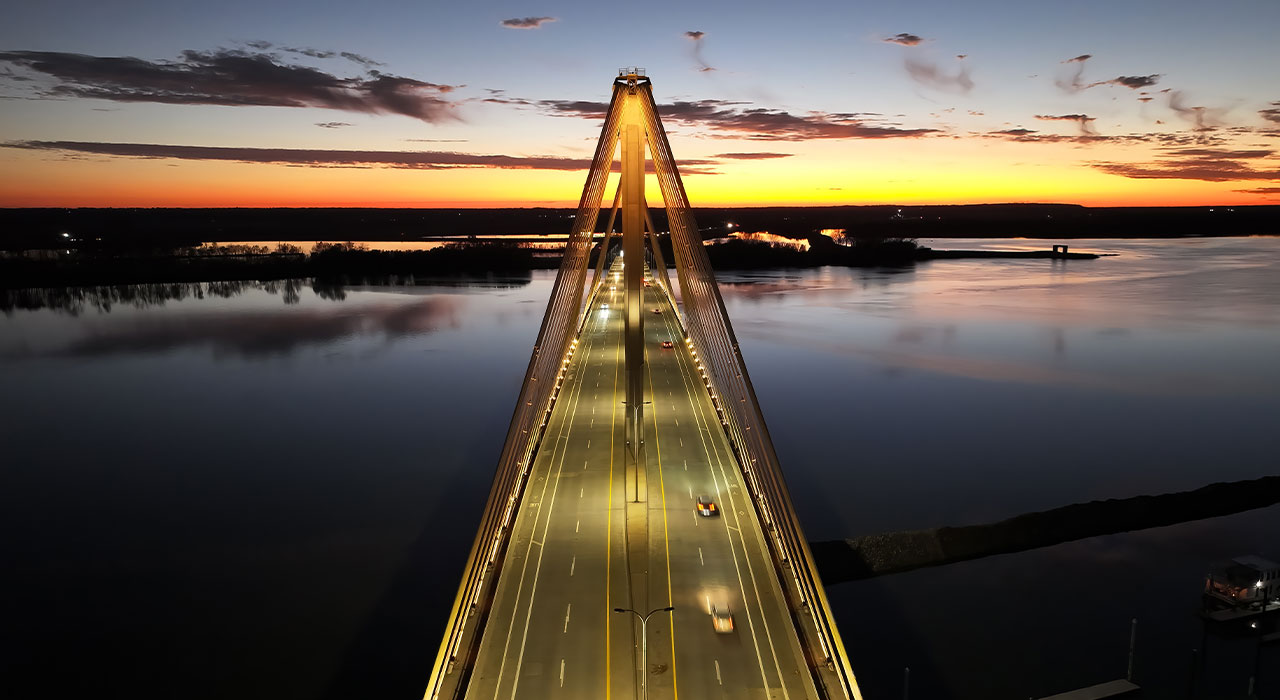
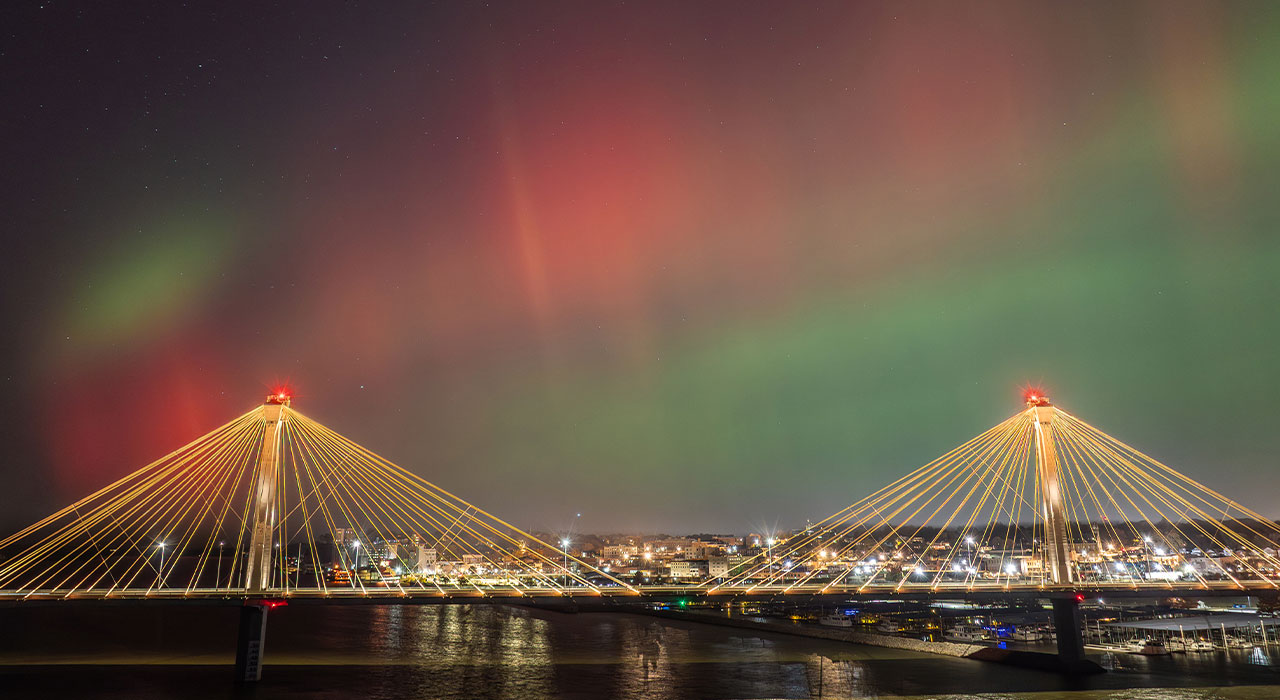
The Clark Bridge—once nicknamed the “Super Bridge”—has been rejuvenated with a robust, vibration‑ready lighting system that restores its nighttime identity and adds programmable flexibility for community events. The precise optics and durable mounting approach reduce maintenance exposure and help the City avoid costly lane closures, while the RGBW capabilities bring new energy and visibility to Alton’s riverfront.
Project Completion: 2024
Electrical Contractor: GRP | WEGMAN
Agent: St. Louis Lighting Group
Photography: Notley Hawkins
To restore the Clark Bridge’s nighttime presence, the City engaged St. Louis Lighting Group to lead a comprehensive lighting retrofit, partnering with local electrical contractor GRP|WEGMAN for installation. The team selected Hydrel’s SAF7 Specialty Architectural Flood (RGBW) as a one‑to‑one replacement, prioritizing longevity, precision, and controllability for a landmark that faces constant vibration and exposure.
Design Drivers: Vibration, Durability, Precision
Bridge environments impose unique mechanical stresses. The SAF7’s 3G vibration rating addressed the primary engineering requirement from the outset. To further strengthen the system for long‑term stability:
Mounting Strategy: Two SAF7 luminaires are installed at the base of each cable on a yoke mount, secured with a safety cable.
Tailored Slip‑Fitter Solution: A typical tenon slip‑fitter relies on set screws that can loosen under persistent vibration. In collaboration with Hydrel, the mount was factory‑welded directly to the yoke, eliminating a known failure point and reducing maintenance risk.
Tamper‑Resistant Hardware: Specified to keep assemblies secure despite vibration and public exposure.
Rock Guard Accessory: Added to shield lenses from rocks and debris thrown by passing vehicles—color‑matched to blend with the luminaire’s finish.
According to Jeff Bone of St. Louis Lighting Group, the vibration‑management package—combining a 3G‑rated luminaire with mounting and hardware refinements—was central to achieving long life and consistent aiming on the bridge.
These measures collectively support lower lifecycle costs. With lane closures costing approximately $4,000–$5,000 each time a repair is needed, minimizing interventions was a core objective.
Optical Strategy: Tight Beams, Clean Lines
Each SAF7 luminaire uses a 10‑degree beam to place light precisely onto the bridge cables. This avoids the “wash‑out” effect typical of broader floods, sharpening the vertical lines and enhancing the cable‑stay geometry at night.
A mid‑project discovery informed the final optical layout: the bridge cables include a protective yellow sleeve that absorbs and shifts color on the lower half. St. Louis Lighting Group and Hydrel produced paired white and color layouts to maintain uniform appearance from base to mid‑span, ensuring both static and color scenes render as intended.
Controls & Programming
The installation is driven by a Pharos LPC Designer Controller with DMX/RDM networking provided by a Pathport® Gateway and VIA Ethernet Switch from Pathway Connectivity Solutions®. While the bridge is static white ~95% of the time, the RGBW system enables Alton to program scenes for civic moments throughout the year—Independence Day, Breast Cancer Awareness Month, Cardinals’ opening day, and local high‑school graduations among them.
During commissioning, St. Louis Lighting Group worked directly with city leadership to dial in exact color matches from vantage points visible to the public. Bone coordinated on‑site adjustments to meet specific requests—such as securing a particular school’s shade of blue—so the final scenes align with community expectations.
Outcome
The Clark Bridge—once nicknamed the “Super Bridge”—has been rejuvenated with a robust, vibration‑ready lighting system that restores its nighttime identity and adds programmable flexibility for community events. The precise optics and durable mounting approach reduce maintenance exposure and help the City avoid costly lane closures, while the RGBW capabilities bring new energy and visibility to Alton’s riverfront.
Project Completion: 2024
Electrical Contractor: GRP | WEGMAN
Agent: St. Louis Lighting Group
Photography: Notley Hawkins
SHARE
VISIT PROJECT